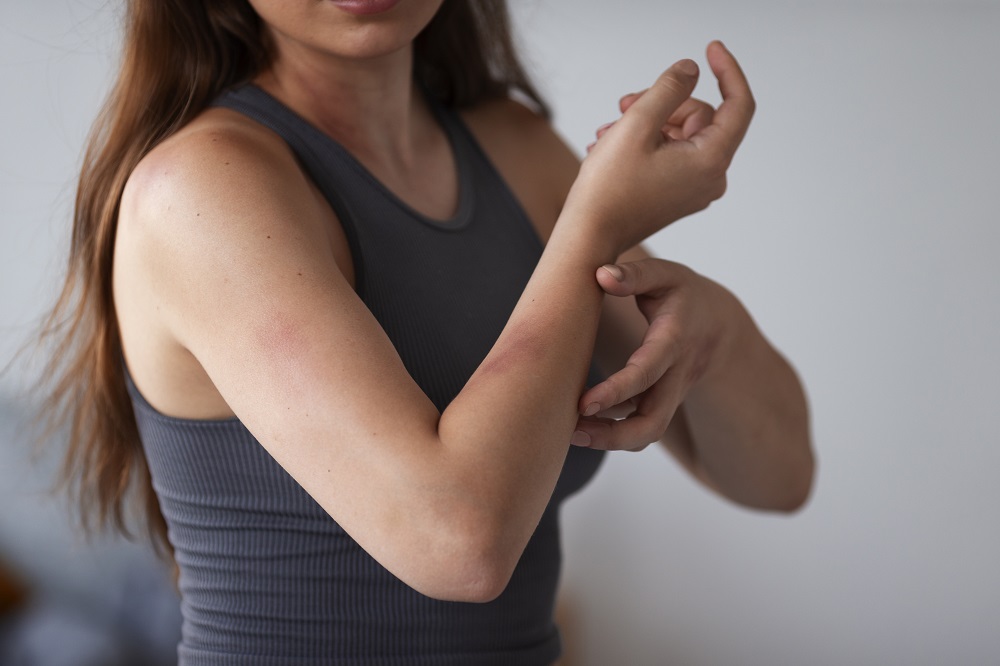
Heat rash itself is usually mild and treatable at home. But if you’re in the heat and also feel confused, dizzy, or unusually hot with or without sweating, that could be heat exhaustion or heat stroke, which needs medical attention right away.
If you’ve got itchy, prickly bumps after sweating in the heat, you’re dealing with one of the most common summer skin complaints, and the good news is most heat rash clears up fast with the right steps. Below: what heat rash actually is, how to get rid of it quickly, how to tell it apart from sun rash or something more serious, and when it’s worth a doctor’s visit.
What Is Heat Rash?
Heat rash, medically called miliaria, happens when sweat gets trapped under the skin because the sweat ducts become blocked. The common form in adults is miliaria rubra, often called prickly heat: small red bumps with an itchy or prickling sensation.
Common triggers include hot, humid weather, heavy sweating, tight or non-breathable clothing, and skin-on-skin friction in areas like the underarms, under the breasts, groin, and neck. The American Academy of Dermatology explains the mechanism behind blocked sweat ducts in more detail.
What Heat Rash Looks and Feels Like
Heat rash typically shows up as small clusters of raised bumps, sometimes tiny clear blisters, on irritated or discolored skin. The sensation is usually itching, prickling, or a mild stinging or burning feeling, often worse with continued sweating or clothing friction.
Appearance can vary by skin tone. On lighter skin, heat rash often looks red or pink. On darker skin tones, it may appear grey, purple, brown, or simply darker than the surrounding skin rather than obviously red, so texture, small raised bumps you can feel, is often a more reliable sign than color alone.
How to Get Rid of Heat Rash Fast
- Cool down first. Move to a cooler, less humid environment as soon as you can, air conditioning if available.
- Take a cool shower or use a cool compress. This helps clear sweat and soothe the skin. Avoid placing ice directly on the skin.
- Let the area air out. Keep the affected skin dry and exposed when possible, especially in skin folds.
- Switch to loose, breathable clothing. Cotton over synthetic fabrics; avoid tight waistbands and heavy layers.
- Soothe the itch with the right products. Calamine lotion or colloidal oatmeal preparations are good options.
- Skip the heavy creams. Oily lotions, thick moisturizers, and perfumed products can further block sweat ducts and make things worse.
- Don’t scratch. Scratching raises the risk of breaking the skin and developing a secondary infection.
Most mild heat rash starts improving within a day or two of consistent cooling and dryness. If home care isn’t cutting it.
How Long Does Heat Rash Last?
Uncomplicated heat rash in adults typically resolves within a few days once the skin is kept cool and dry. With consistent home care, many people notice improvement within 24 to 48 hours. Persistence beyond about a week, or worsening despite home care, is a signal to get it checked rather than keep waiting.
Is Heat Rash Contagious, and Can It Spread?
Heat rash is not contagious. It comes from blocked sweat ducts, not an infectious organism, and can’t pass from one person to another. It can appear or worsen in new areas if heat and sweating continue, which reflects ongoing duct blockage in those areas rather than the rash “spreading” the way an infection would.
Heat Rash vs. Sun Rash (Sun Poisoning): What’s the Difference?
These two get confused often, but the cause is different.
Heat rash is caused by trapped sweat and blocked sweat ducts. It appears in sweaty, covered, or friction-prone areas, skin folds, or under clothing, and doesn’t require any direct sun exposure.
Sun rash, sometimes called sun poisoning (though true sun poisoning more often refers to a severe sunburn reaction), is caused by a reaction to sunlight itself. It typically appears on sun-exposed skin like the face, arms, chest, and neck, and can feel itchy, warm, or burning.
Some rashes don’t clearly fit either pattern. Contact dermatitis, allergic reactions, insect bites, or fungal infections can also resemble heat rash, which is part of why a rash that doesn’t improve or looks atypical is worth a clinical look rather than guesswork. Mayo Clinic’s overview of sun allergy covers the sun-related side of this distinction in more depth.
How to Prevent Heat Rash
- Choose lightweight, breathable, moisture-wicking clothing
- Spend peak heat hours in air-conditioned or well-ventilated spaces when possible
- Keep skin-fold areas dry; pat dry rather than rub after sweating or bathing
- Choose lightweight, non-comedogenic sunscreens and lotions rather than heavy, occlusive formulas
- Shower soon after heavy sweating rather than letting sweat sit on the skin
Heat Rash on Specific Areas: Under the Breasts and On the Face
Under the Breasts
Skin-on-skin contact and trapped moisture make this a common site for heat rash. Extra attention helps here: keep the area dry, choose moisture-wicking or breathable fabric against the skin, and avoid heavy creams in this specific area.
On the Face
Less common, but it happens, often along the hairline, forehead, or jawline in hot, humid conditions or with heavy sweating during exercise. The same cooling and drying principles apply. Avoid heavy or oil-based facial products until it clears, and be cautious if you introduce a new skincare product right before symptoms start, since contact dermatitis can look similar on the face.
Heat Rash or Something More Serious? {#heat-rash-or-something-more-serious}
Signs of Infection
A heat rash that’s been scratched or sits in a skin fold can become infected. Watch for:
- Increasing pain
- Spreading redness with warmth to the touch
- Pus or discharge
- Red streaking from the area
- Fever
- Swollen, tender lymph nodes nearby
Any of these mean it’s time to see a doctor rather than continue home care.
Heat Exhaustion and Heat Stroke Are Not the Same as Heat Rash
Heat rash is a skin-level condition. Heat exhaustion and heat stroke are systemic and can be dangerous. If you’re in a hot environment and also notice confusion, dizziness, nausea, a rapid heartbeat, or a very high body temperature, that’s a different and more serious situation, with heat stroke specifically being a medical emergency.
For the full breakdown of these warning signs and when to call 911 versus see a same-day doctor, see Hillside’s summer symptom guide. The CDC’s (Centers for Disease Control and Prevention) guidance on extreme heat also covers heat-related illness signs in more depth.
Managing a Chronic Condition? Heat Tolerance Matters Too
Certain chronic conditions and medications can affect how well the body regulates temperature or sweats, which can increase the risk of both heat rash and heat illness. This is relevant for patients managing conditions such as diabetes or cardiovascular disease, and for anyone taking medications that affect sweating. It’s worth having a conversation with your primary care provider, especially as you head into Texas summers.
If you manage a chronic condition and spend significant time in the heat, bringing this up at your next visit is a reasonable, proactive step.
When to See a Doctor About Heat Rash
- The rash lasts more than a few days or worsens despite home care
- Signs of infection appear, as described above
- Fever develops alongside the rash
- The rash looks atypical, spreads rapidly, or you’re unsure what’s causing it
- It keeps coming back throughout the summer
If any of this sounds like you, call Hillside Primary Care to get it checked.
Hillside Locations Across San Antonio and Beyond
Hillside Primary Care has locations across San Antonio and the surrounding region, including Live Oak, Stone Oak, Medical Center, Castle Hills, and New Braunfels, along with additional locations in Killeen, Seguin, El Paso, and other nearby communities. Contact us to find the location nearest you.
Have questions about cost or coverage? Visit our pages on insurance we accept and self-pay pricing, or call to ask directly.
Talk to a Hillside Doctor
Most heat rash is mild and clears up with simple cooling and drying steps. But a rash that’s persistent, worsening, unusual-looking, or paired with any sign of heat illness deserves a real look, not more guessing.
Book an appointment at Hillside Primary Care if yours isn’t improving.
This content is for educational purposes only and is not a substitute for individualized medical advice. If you suspect heat exhaustion or heat stroke, seek medical attention immediately.
FAQs:
Q1. What is heat rash?
Ans: Heat rash, or miliaria, happens when sweat gets trapped under the skin due to blocked sweat ducts. It shows up as small, itchy or prickly bumps, most often in areas where skin touches skin or sweat collects, like the underarms, neck, and skin folds.
Q2. How do you get rid of heat rash fast?
Ans: Cool down, get out of the heat and humidity as soon as possible. Take a cool shower, switch to loose, breathable clothing, keep the area dry, and use calamine lotion or colloidal oatmeal for itching. Avoid heavy creams and scratching. Most mild cases improve within a day or two.
Q3. How long does heat rash last?
Ans: Typically a few days with consistent cooling and dryness, often with noticeable improvement within 24 to 48 hours. If it lasts more than a week or gets worse, it’s worth having a doctor take a look.
Q4. Is heat rash contagious?
Ans: No. Heat rash is caused by blocked sweat ducts, not an infection, so it can’t spread from person to person.
Q5. Can heat rash spread on your body?
Ans: It can show up in new areas if heat and sweating continue, but that reflects ongoing sweat duct blockage rather than the rash spreading the way an infection would.
Q6. What’s the difference between heat rash and sun rash?
Ans: Heat rash results from trapped sweat and appears in sweaty or covered areas, with or without sun exposure. Sun rash is a reaction to sunlight and typically appears on sun-exposed skin like the face, arms, and chest. A rash that doesn’t clearly fit either pattern is worth having checked.
Q7. Does Benadryl help with heat rash?
Ans: Oral antihistamines like Benadryl can help with itching, though they’re sedating and can cause drowsiness. Non-drowsy antihistamines are available if that’s a concern.
Q8. When should I see a doctor for a heat rash?
Ans: See a doctor if the rash lasts more than a week, worsens despite home care, shows signs of infection, such as pus, spreading warmth, or fever, looks unusual, or keeps coming back throughout the summer.
About the Author